2026.10.29 · Kintsugi Journal
Can't Switch Off Before Year-End in Fukuoka? How to Release That Always-On Tension Near Hakata Station
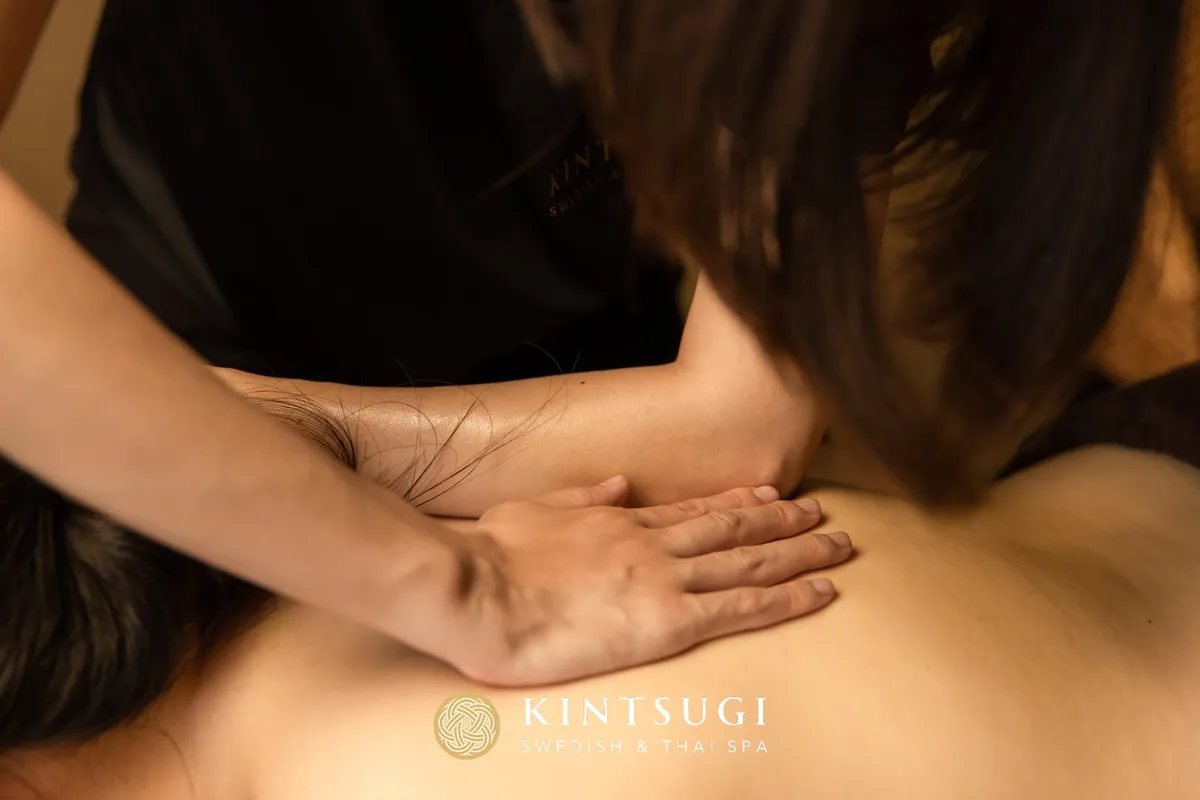
By late October and into November, something shifts in Fukuoka. The year-end push begins, deadlines stack up, calendars fill with events and travel, and your mind quietly stays switched on even when you finally sit down. You rest, but you don't feel rested. If that sounds familiar, you're not alone, and there's a reason your body stays braced long after the day ends.
Why do I feel tense even when I'm resting?
Because your body often stays in a low-level alert state long after the stressful moment has passed. When work and events pile up toward year-end, your shoulders creep up, your jaw sets, and your breathing stays shallow without you noticing. This becomes a habit your muscles hold onto, so even a full night's sleep or a quiet evening doesn't fully release it. Many guests describe it as feeling tired and wired at the same time: exhausted, but unable to properly let go.
For visitors and business travelers, this layers on top of long-haul flight stiffness and packed sightseeing days. For expats and long-term residents, it builds up slowly over weeks until a stiff neck and a tight back feel almost normal.
What does always-on tension actually do to the body?
It keeps your muscles working when they should be idling. The small muscles around your neck, between your shoulder blades, and along your lower back stay gently contracted all day. Over time that steady effort leaves you feeling heavy and stiff, and it can make your shoulders sit higher than they should. Your breath gets shorter because your chest and upper back never fully soften, which can leave you feeling like you can't take a satisfying deep breath.
The tricky part is that this tension is quiet. There's no single injury to point to, just a general sense that your whole body is holding on and won't relax on command.
How does a massage help release this kind of tension?
Slow, deliberate pressure gives your nervous system a signal that it's safe to let go. Our therapists work with Swedish massage, using long, flowing strokes and steady pressure rather than sharp, forceful techniques. This style is well suited to the kind of held tension that builds up before year-end, because it encourages the body to soften gradually instead of bracing against the work.
As the muscles along your neck, shoulders, back, and legs begin to loosen, many guests notice their breathing naturally slows and deepens. That shift is often the moment people feel the always-on state finally start to ease. Our therapists trained in Canada and can read where your body is holding the most, adjusting as they go.
Can I come in if I only have an hour between plans?
Yes, and that's exactly the kind of guest we see a lot of at this time of year. Kintsugi Spa is a 7-minute walk from Hakata Station and near Canal City, so it's easy to fit a session between meetings, after a shopping run, or before a dinner reservation in the lively area around the Furufuru bakery. You don't need to clear a whole afternoon to feel the difference.
If you're visiting Fukuoka and your days are full of walking and sightseeing, a session can also help reset tired legs and a stiff upper back before you carry on.
What should I know before booking?
Just come as you are, and let the therapist know where you feel most tense. English-speaking staff are here to help, so you can explain how you're feeling and what you'd like to focus on without worrying about a language barrier. If you have specific questions about session length or what's available, the booking page has the current details.
The weeks before year-end rarely slow down on their own, so giving your body one genuine chance to unwind can make the whole stretch feel more manageable. If you're ready to loosen that tight, braced feeling and breathe a little easier, Book online and come let your shoulders drop for a while.